A filter-based near-infrared spectrometer gives manufacturers a fast, compact route to routine composition analysis. It targets the near infrared region, where molecular bonds such as C-H, O-H, and N-H absorb specific wavelengths. That absorption pattern carries chemical information. The instrument captures that pattern, converts it into a spectral signal, and uses calibration models to estimate composition and quality indicators.
This architecture fits production environments that need speed, repeatability, and lower system complexity. It works especially well in grain intake, feed processing, dairy screening, pharmaceutical inspection, chemical raw-material checks, and warehouse or transport-side quality control.
How a Filter-Based NIR Spectrometer Works
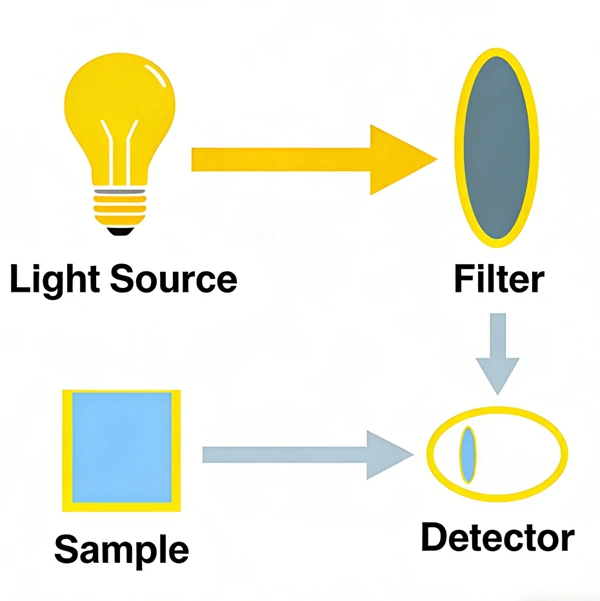
The system sends near-infrared light through or onto the sample. Specific molecular bonds absorb selected wavelengths, which creates a measurable intensity change. A filter-based optical path then isolates the required wavelength bands instead of scanning with a large dispersive module. The detector records the filtered signal, and the algorithm converts the spectral response into identification or concentration data.
In practice, this gives two analytical paths. Qualitative analysis identifies the material through a classification model. Quantitative analysis estimates component content through a calibration model built around absorbance behavior and spectral correlation.
Why Optical Filters Matter
The filter set defines the usable wavelength window, signal contrast, and measurement speed. In a filter-based NIR spectrometer, the filter design does not sit at the edge of the system. It sits at the core of the measurement engine. Well-matched NIR filters improve signal separation, cut unwanted background, and keep the system compact enough for field deployment.
Why This Architecture Fits Grain Inspection
Grain screening needs speed more than laboratory-style spectral density. Buyers need a clear answer in seconds: moisture, protein, fat, starch, or pass/fail quality status. A filter-based NIR spectrometer answers that need with a narrower but application-focused spectral window.
For grain inspection, the typical working band in this case is 893-1045 nm. That range targets practical composition analysis while keeping the hardware simpler, smaller, and easier to deploy in receiving stations, mills, feed plants, and storage sites.
Typical Performance Window for a Filter-Based NIR Spectrometer
The following table converts the provided specification snapshot into a web-ready format for an application-case page.
| Performance Metric | Range | Typical Value |
|---|---|---|
| Wavelength Range | 800-2500 nm, depending on the filter configuration | 893-1045 nm for grain inspection |
| Spectral Resolution | 10-50 nm | 20 nm |
| Wavelength Accuracy | ±1-2 nm | ±1 nm |
| Scanning Speed | Millisecond-level filter switching | <1 second |
| Detector Type | Photodiode or InGaAs detector | Single-point InGaAs detector |
| Light Source Type | LED or tungsten lamp | Near-infrared LED array |
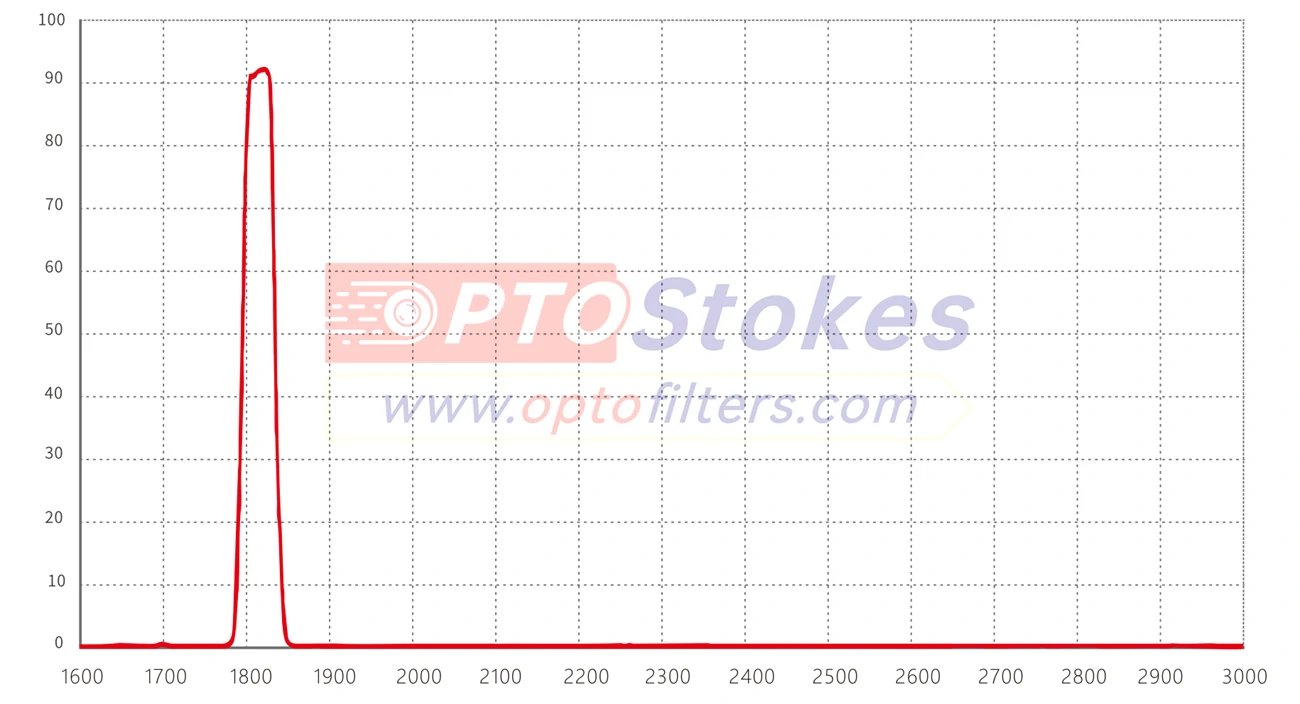
1810nm NIR filter
What the Numbers Mean in a Real Project
1. Wavelength Range
A broad platform may span 800-2500 nm, but most field instruments do not need the entire range. In a filter-based system, the filter stack selects the wavelengths that matter most for the target application. That keeps the design efficient and avoids collecting spectral data that the model does not use.
2. Spectral Resolution
A 10-50 nm resolution window, with 20 nm as a practical typical value, fits targeted quality screening. It will not replace a full research-grade spectrometer for every job. It will, however, support fast routine decisions when the analytes and calibration targets are well defined.
3. Wavelength Accuracy
Accuracy at ±1-2 nm, with ±1 nm as a typical value, keeps the instrument aligned with the intended absorption region. That matters because filter-based systems depend on repeatable band placement. If the center band drifts, the model loses confidence fast.
4. Scanning Speed
Millisecond-level filter switching and a total scan time under one second make this architecture attractive for throughput-driven environments. Operators can check more lots, reduce bottlenecks, and move faster at receiving or process checkpoints.
5. Detector and Light Source Selection
The detector path can use a photodiode or an InGaAs detector, with a single-point InGaAs detector as the typical configuration in this case. The light source can use LED or tungsten illumination, with a near-infrared LED array as the typical choice. This combination supports compact instrument design and fast response.
Typical Use Cases
Agricultural Quality Control
Grain buyers, feed producers, and dairy processors use filter-based NIR systems for fast checks on moisture, protein, fat, starch, and other major composition indicators. The goal is not academic spectroscopy. The goal is a fast production decision.
Dedicated Component Analysis
Pharmaceutical and chemical processes use the same architecture for rapid concentration checks on target components, active ingredients, or raw-material purity. When the analyte and calibration window are clear, a filter-based NIR system can give a direct operational advantage.
On-Site Screening
This design suits production lines, warehouses, transport inspection points, and incoming goods stations. It stays smaller, simpler, and more cost-conscious than many full-spectrum systems, which makes it practical for front-line deployment.
Where OPTOStokes Fits
OPTOStokes maintains a dedicated NIR optical filter ecosystem that includes NIR bandpass filters, longpass filters, custom optical filters, and high-transmission filter topics across its product and tags structure. That makes it a relevant partner for filter-wheel, multi-channel, and application-specific NIR instrument design. :contentReference[oaicite:1]{index=1}
If your instrument needs a narrower grain-analysis window, a compact LED-based optical path, or a custom filter layout for on-site screening, start with the target analyte and scan architecture. Then match the filter stack to the actual signal path. In-stock standard options can shorten prototype lead time. Custom sizes and tailored wavelength sets can take the design the rest of the way.
Key Takeaway
A filter-based NIR spectrometer does not try to do everything. It does the high-value job fast. For grain quality screening and similar routine checks, that tradeoff often wins. The right filter set turns a broad NIR principle into a practical industrial tool.
If you are building a compact NIR analyzer for grain, feed, pharma, or field screening, contact the OPTOStokes optical engineering team for tailored filter solutions.
| Performance Metric | Range | Typical Value |
|---|---|---|
| Wavelength Range | 800-2500 nm, depending on the filter configuration | 893-1045 nm for grain inspection |
| Spectral Resolution | 10-50 nm | 20 nm |
| Wavelength Accuracy | ±1-2 nm | ±1 nm |
| Scanning Speed | Millisecond-level filter switching | <1 second |
| Detector Type | Photodiode or InGaAs detector | Single-point InGaAs detector |
| Light Source Type | LED or tungsten lamp | Near-infrared LED array |
Q: What is a filter-based NIR spectrometer?
A: A filter-based NIR spectrometer isolates selected near-infrared wavelength bands with optical filters instead of relying on a larger dispersive optical train. It measures how the sample changes light intensity at those bands, then uses calibration algorithms to convert that response into material identification or concentration data. This design fits fast industrial checks because it stays compact, cost-aware, and application-focused. If your project targets one material family or one narrow decision window, this architecture often gives a better deployment path than an overbuilt lab instrument.
OPTOStokes supports the NIR filter, longpass filter, and custom optical filter topics that fit this kind of instrument design.