What Are the Key Factors Affecting Machine Vision Filter Performance?
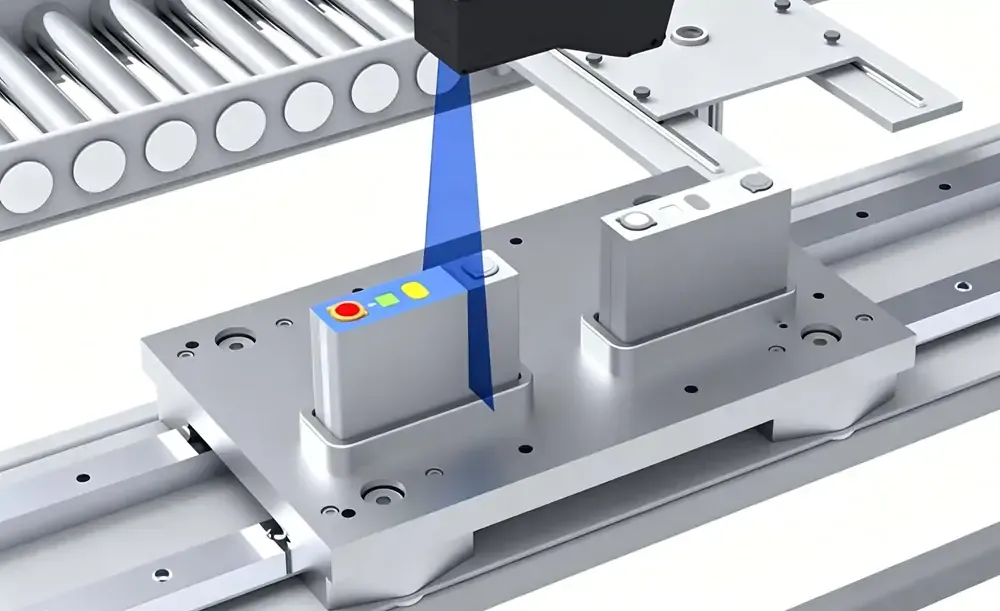
Machine vision technology enables automated systems to capture, analyze, and interpret visual information from the environment, serving as the foundation of modern industrial automation. It has become indispensable across manufacturing, logistics, quality inspection, and robotics applications. A typical machine vision system consists of three core components: image acquisition, image processing and analysis, and actuation execution.
Machine vision filters are critical optical components integrated into the image acquisition module. Their primary function is to selectively transmit desired signal light while blocking unwanted ambient light and interference sources. The performance of these filters directly determines the quality of captured images, which in turn impacts the accuracy and reliability of subsequent image analysis and system decision-making.
Four Critical Performance Parameters for Machine Vision Filters
Selecting the appropriate machine vision filter requires careful consideration of four key performance parameters. Each parameter plays a unique role in determining how effectively the filter will perform in a specific application environment.
1. Center Wavelength (CWL)
The center wavelength of a machine vision filter is the midpoint of its transmission band. In most applications, this wavelength is matched to the peak emission wavelength of the system's active illumination source (typically LEDs or lasers).
When illumination light enters the filter at non-normal angles (a common scenario in practical imaging systems), the effective center wavelength of the filter shifts toward shorter wavelengths. To compensate for this angular shift and fully utilize the filter's transmission bandwidth, it is standard practice to select a filter with a center wavelength slightly shifted toward longer wavelengths. The magnitude of this shift depends on the maximum angle of incidence and the filter's bandwidth.
At OPTOStokes, we maintain an extensive inventory of standard filters calibrated for all common illumination wavelengths, including 405nm, 450nm, 520nm, 630nm, 660nm, 850nm, and 940nm.
2. Bandwidth (FWHM)
Bandwidth, measured as the Full Width at Half Maximum (FWHM), defines the range of wavelengths that the filter transmits at 50% of its peak transmission. The optimal bandwidth for a given application depends on multiple factors:
Spectral bandwidth of the illumination source
Wavelength stability of the light source over temperature and time
Maximum angle of incidence of light on the filter
Required signal-to-noise ratio (SNR) of the imaging system
Manufacturing tolerances of the filter coating
Narrow bandwidth filters (typically 10-30nm FWHM) provide superior interference rejection and higher SNR, making them ideal for high-contrast imaging applications. Wider bandwidth filters (50nm or greater) are more tolerant of wavelength variations and angular shifts, suitable for general-purpose imaging.
3. Cutoff Depth (Optical Density)
Cutoff depth, specified in Optical Density (OD) units, measures how effectively the filter blocks unwanted wavelengths outside the transmission band. Higher OD values indicate greater blocking capability:
OD3: Blocks 99.9% of unwanted light (0.1% transmission)
OD4: Blocks 99.99% of unwanted light (0.01% transmission)
OD5: Blocks 99.999% of unwanted light (0.001% transmission)
The required cutoff depth is directly related to the intensity of interference light in the application environment. For most indoor industrial applications with indirect ambient light interference, OD3 or OD4 cutoff depth provides sufficient performance. However, applications with strong direct interference (such as direct sunlight or high-power adjacent light sources) may require OD5 or higher cutoff depth.
4. Cutoff Range
The cutoff range defines the entire spectral region over which the filter provides the specified blocking performance. This parameter is determined by three key factors:
Emission wavelength range of the active illumination source
Spectral response range of the image sensor
Complexity and intensity of interference light in the operating environment
Effective machine vision filters must provide consistent blocking across the entire response range of the image sensor, typically from approximately 300nm (ultraviolet) to 1100nm (near-infrared). This ensures that all potential interference sources outside the desired transmission band are effectively suppressed.
Performance Parameter Summary
| Parameter | Core Definition | Key Influencing Factors | Typical Application Requirements |
|---|---|---|---|
| Center Wavelength | Midpoint of the filter's transmission band | Illumination source, angle of incidence | Matched to source with appropriate long-wave shift |
| Bandwidth (FWHM) | Wavelength range at 50% peak transmission | Source stability, angular range, required SNR | 10-30nm (high contrast), 50nm+ (general purpose) |
| Cutoff Depth (OD) | Measure of unwanted light blocking capability | Interference light intensity, direct vs indirect | OD3-OD4 (most applications), OD5+ (high interference) |
| Cutoff Range | Spectral region with specified blocking performance | Sensor response, source range, environment interference | 300nm to 1100nm (standard silicon sensors) |
OPTOStokes Machine Vision Filter Solutions
OPTOStokes offers a comprehensive range of high-performance machine vision filters designed to meet the demanding requirements of industrial automation applications. Our world-class coating technologies ensure precise control of all critical performance parameters, delivering consistent and reliable imaging results.
We maintain an extensive in-stock selection of standard machine vision filters covering all common wavelengths and specifications, enabling fast delivery for urgent projects. For applications with unique requirements, we provide fully customized filter solutions tailored to your specific performance needs. Our robust production lines ensure predictable lead times and guaranteed quality for both prototype and high-volume production orders.
Get Expert Guidance for Your Filter Selection
Are you struggling to select the optimal machine vision filter for your application? Do you require custom filters with specific performance characteristics to address challenging interference issues? Our team of optical engineering experts is ready to provide technical support and help you find the best solution for your imaging system.
Contact us at sales@optofilters.com to discuss your requirements, request technical consultation, obtain sample filters, or receive a detailed quotation. We work closely with our customers to deliver machine vision filters that enhance system performance and reliability.