
Products Description
CPL circular polarizer: 400-700nm high transmittance, polarization layer extinction ratio of 1000:1, both adhesive free and adhesive coated types
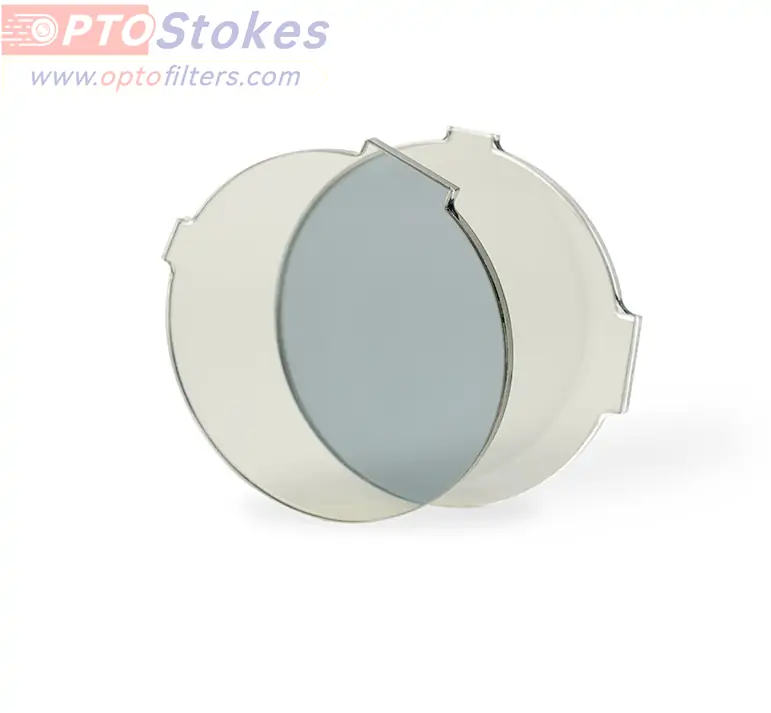
CPL is a circular polarizer: light passes through it and becomes circularly polarized light instead of linearly polarized light. This difference looks academic and actually determines whether it can rotate - when a linear polarizer rotates once, the transmitted light intensity will fluctuate accordingly; When a circular polarizer rotates once, the light intensity remains basically unchanged, only the rotation direction changes. It should be selected for situations that require "turning angle without changing brightness", and should not be selected for situations that require deviation detection and extinction.
Technical specifications
; Adhesive: One side self-adhesive, the other side smooth
| Parameters | Specifications | Description |
|---|---|---|
| Product model | CPL circular polarizer | Also known as polarizing film, circular polarizer |
| Spectral range | 400-700nm | Visible band |
| Transmittance | T>; 43% | given according to indicators; Whether to include a delay layer needs to be confirmed with the supplier |
| Polarization Layer Extinction Ratio | 1000:1 | Refers to the internal linear polarization layer, non circularly polarized output end indicator |
| Working temperature | -20 ℃~60 ℃ | Working range, approaching the upper limit for a long time will affect the service life |
| Appearance | Transparent light gray | Polarizer natural color |
| Form | Non adhesive type/adhesive type | Non adhesive: double-sided protective film, smooth on both sides; |
| Available sizes | 0-10000mm range | Actual specifications to be confirmed upon inquiry |
| Thickness/circular polarization | Confirm according to inquiry | This page does not provide |
What is the structure of a circular polarizer
CPL is not a single-layer component, it is composed of a linear polarization layer and a quarter wave plate (delay layer) stacked together: light first passes through the linear polarization layer to become linearly polarized light, and then through the delay layer to become circularly polarized light. By understanding this structure, one can comprehend a detail in the specification sheet - the extinction ratio of 1500:1 describes the inner layer of linear polarizer, not the circularly polarized output end.
The indicators that a circular polarizer should look at to the outside are its degree of circular polarization or ellipticity, plus its overall transmittance. Using extinction ratio to measure a piece of CPL, the indicator itself is correct, but it does not measure the same thing. When discussing parameters, align this line first, which will save a lot of back and forth communication later on: do you need "output end closer to ideal circular polarization" or "inner polarizer cleaner", the two correspond to different issues.
Biological vision and polarization imaging: a parameter based selection deduction
The following is an example of selection, not a customer case.
Requirement: Biological vision research or biomimetic polarization sensing device, which needs to present controllable polarization stimuli in the field of view or perform polarization sensitive imaging detection, and does not want the brightness to change with the adjustment of components.
Why use CPL instead of linear polarizer: When the linear polarizer rotates, the transmittance changes by cosine squared, and the brightness fluctuation is visible to the naked eye; The rotation of a circular polarizer only changes the direction of rotation, and the light intensity remains almost unchanged. This difference is crucial when doing behavioral stimuli - the animal's response to changes in brightness will mask its response to polarization, rendering the experimental data useless. This is also the reason why circularly polarized films are widely used in display anti crosstalk and machine vision anti reflection. The same physical property has changed the scene.
Applicable boundary: visible wavelength range of 400-700nm; The ambient temperature is within -20~60 ℃ and does not approach the upper limit for a long time; Not used for polarization detection, extinction ratio measurement, or polarization calibration.
Before placing an order, it is necessary to verify the actual measured value of the overall transmittance (including the delay layer, not just the polarization layer); Circular polarization degree or ellipticity; The stress situation after bonding or clamping - the polarizing film will introduce birefringence under stress, and when the direction changes, the output will shift from circular polarization to elliptical polarization.
Two easily trampled misjudgments
One is to use CPL as a analyzer. The output of a circular polarizer is circularly polarized light, and to detect polarization, a linear polarizer must be used as an analyzer; Placing two CPLs facing each other will not produce extinction effect - circularly polarized light passes through a quarter wave plate and then becomes circularly polarized again, with the direction determined by the orientation of the wave plate. The angular relationship between the two plates can no longer be described by Marius' law. When measuring extinction ratio and polarization degree, a linear polarizer should be used. The cost of buying the wrong one is not just poor performance, but the inability to measure the quantity you want.
The second is to consider the working temperature as a performance guarantee. The specification of -20~60 ℃ is the working range, but it does not mean that the performance remains unchanged within this range. The core of a polarizing film is a stretched PVA film with iodine or dye molecules. If it is kept close to the upper temperature limit or in a high humidity environment for a long time, the polarization degree will slowly decrease: the appearance will first turn yellow, followed by an increase in transmittance and a decrease in contrast. It's not a big problem to install it in a sealed chassis; Installed outdoors or in high humidity workshops, performance degradation after two years is not surprising. The solution is to attach the film to a rigid substrate or encapsulate it with a sandwich structure, rather than relying on the film itself to support it.
Customization and delivery support
We can provide two types of products according to the project: non adhesive and adhesive. They can be cut into sheets or supplied as rolls as needed. The shape and size can be adjusted, and a set of snap rings and bonding solutions can be provided. The adhesive type is suitable for direct bonding to lenses, display screens, or sensor windows; The adhesive free type is suitable for clamping or sandwich packaging, making it easy to rework and replace - this is more worth considering during the sampling stage than the price. Once the adhesive is attached, it often needs to be replaced along with the substrate during rework. Samples and measured data can be provided by project, for more categories, please refer to<a href=“ https://www.optofilters.com/product/OpticalFilters.html Classification of optical filters and polarizing elements
Information required for inquiry
Please provide: the frequency band to be used, the required overall transmittance and circularly polarized degree, the form selection (with or without adhesive), the external dimensions and quantity, the material of the substrate to be attached, the temperature and humidity of the working environment, and whether it needs to be paired with other polarizing elements. The first and second items are the most crucial - they determine whether the CPL or linear polarizer can meet the requirements, and they are also the most easily skipped step in this type of inquiry. Technical Consultation and Inquiry: sales@optofilters.com , or through<a ref=“ https://www.optofilters.com/single/contact-us.html Contact us on thepage to submit.